
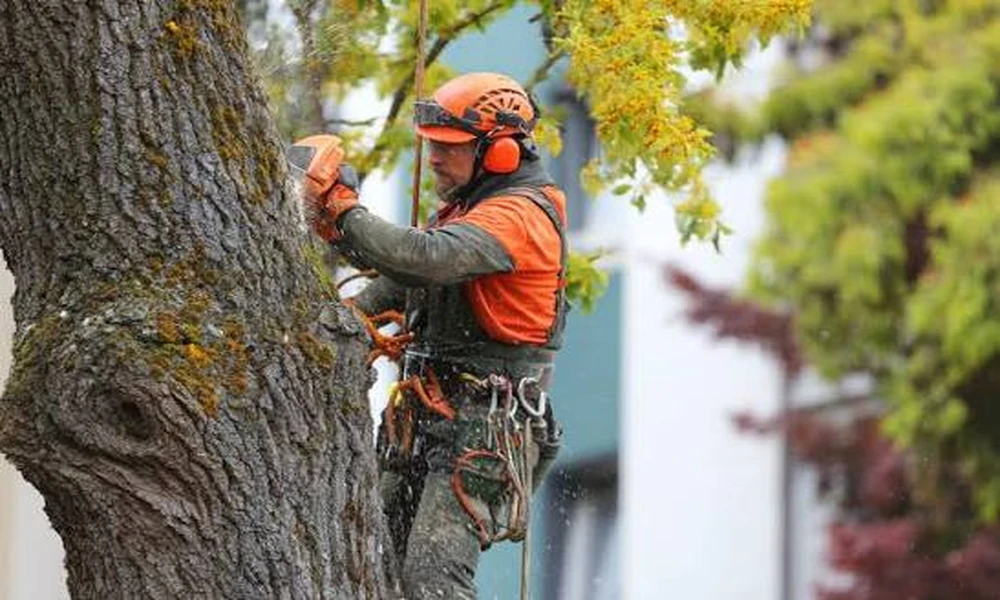
Hiring a company to remove a tree involves more than booking whoever quotes the lowest price on a single phone call, since the actual scope of professional tree cutting services stretches from initial assessment through to final site cleanup. Understanding what a proper engagement should include helps a property owner evaluate a quote on more than price alone. Reviewing tree cutting is the first thing any genuinely reputable provider should always raise entirely unprompted, well before any formal quote is ever even discussed at all.
The Initial Site Assessment
A proper engagement begins with a site visit to assess the tree’s condition, its surroundings, access constraints, and any nearby structures or utilities that will influence the technique eventually chosen for the job. This assessment is also when a provider should confirm whether the specific tree requires regulatory approval before any work can lawfully proceed, and should be conducted in person rather than estimated remotely from a photograph alone, since ground conditions and access are easy to misjudge from a distance.
What a Detailed Quote Should Cover
A genuinely detailed quote itemises the felling or dismantling work, debris removal, stump treatment if required, and any protective measures needed for nearby property, rather than presenting a single vague lump sum covering everything. Comparing quotes on this level of detail, not just the bottom line, reveals which providers have actually thought through the job properly, and which are simply hoping the client will not ask too many questions.
Confirming Insurance and Licensing
A professional provider carries liability insurance covering damage to property and injury to workers or bystanders, along with any licensing required for operating heavy equipment or working at height on a client’s premises. Asking to see proof of both before signing any agreement is a reasonable and increasingly standard request, and a provider hesitant to produce either document promptly is worth reconsidering entirely.
Choosing the Right Equipment for the Job
The equipment required for a small backyard tree is entirely different from what a large specimen near power lines or a shared boundary might demand, ranging from basic chainsaws through to cranes and specialised rigging systems. A provider that shows up with the wrong equipment for the actual job at hand is a clear warning sign worth taking seriously before work ever begins, since improvisation on site rarely ends in a genuinely safe outcome.
How Debris Removal Is Typically Handled
Larger jobs generate a substantial volume of branches, trunk sections, and foliage, and a proper service includes chipping, hauling, or disposal as part of the agreed scope rather than leaving a property owner to arrange this separately. Comparing this against how tree pruning helps set realistic expectations for cleanup time and cost on a full removal job.
Stump Removal and Site Restoration
A felled tree leaves behind a stump that can be ground down, chemically treated, or left in place depending on the property owner’s preference and any plans for the space afterward. Clarifying this decision upfront avoids a surprise additional charge once the main cutting work has already been completed on site, when negotiating leverage has effectively disappeared entirely for the property owner.
Timelines for a Typical Job
A straightforward removal might take a single day, while a large tree in a constrained space with permit requirements attached can stretch across several weeks once approval and scheduling are both factored into the process. Asking for a realistic timeline upfront, rather than an optimistic estimate, helps a property owner plan around the disruption properly, including any temporary access restrictions the work might require.
Questions to Ask Before Signing an Agreement
Beyond price, worthwhile questions include how the crew handles unexpected complications, what happens if weather delays the job, and how disputes over damage to property are actually resolved between the two parties involved. A provider willing to answer these clearly, rather than deflecting, is generally a stronger sign of genuine professionalism than a polished sales pitch alone, and worth weighing more heavily than a slightly lower quote.
Comparing Tree Cutting to Ongoing Maintenance Contracts
Some providers offer ongoing maintenance arrangements covering multiple trees across a property, which can work out more cost-effective than booking removal or pruning work reactively each time an individual issue arises. Structuring tree maintenance is worth discussing with a provider managing several mature trees on the same site.
Choosing a Provider With Confidence
A professional tree cutting service should be evaluated on its assessment process, documentation, insurance, and clarity of communication, not simply on whichever quote happens to arrive first or land lowest on price. Taking the time to compare properly before committing avoids a poor experience on a job that, once started, is difficult to reverse, and often impossible to fully undo once the tree itself is gone. A property owner who asks the right questions upfront, rather than after signing an agreement, is in a far stronger position throughout the entire engagement.