
Anyone who has lived through a Tucson monsoon knows the rhythm. The humidity creeps up through late June. The first dust storms roll across the valley. Then the sky opens up, and within a few days something else starts happening that newer residents don’t always connect to the rain. The pests change. The volume of calls Swift Pest fields between July and September runs noticeably higher than the rest of the year, and the species shift in predictable ways. Subterranean termites swarm. American cockroaches surface from floor drains. Giant desert centipedes turn up under pool decks. Crickets carpet patios under exterior lights. Understanding why this happens makes it easier to prepare, and the homes that handle monsoon best are usually the ones that didn’t wait until July to think about pest pressure.
Why the Rain Triggers a Pest Surge in the Sonoran Desert
The Sonoran Desert spends nine months of the year in a state most insects can’t tolerate. Surface temperatures are brutal, soil moisture is minimal, and most species spend that time in deep cracks, burrows, or root systems waiting for conditions to change. Monsoon rain changes everything in days. Soil moisture climbs. Humidity holds overnight instead of crashing. Tinajas fill, plant material softens, and the food web wakes up.
Pests that were dormant or hiding deep underground move to the surface to reproduce, hunt, and disperse. That same moisture and humidity drives them toward the cooler, more humid conditions inside houses, which is why monsoon is the season when the most secretive desert pests suddenly become a household problem.
July: Termite Swarms After the First Big Rain
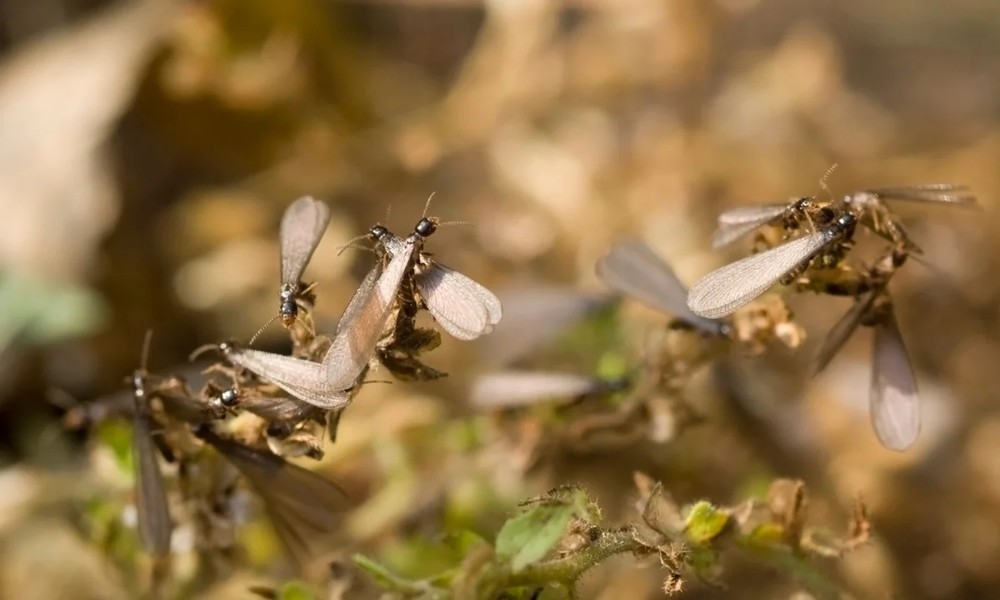
Subterranean termites, specifically Heterotermes aureus and Reticulitermes species, are the most damaging pest in Tucson and the one homeowners are most likely to underestimate. They live in colonies underground year-round, but reproductive swarmers (alates) only emerge for a few brief windows each year. The biggest swarm event happens within hours of the first significant monsoon rainfall, usually in early to mid-July.
A monsoon termite swarm looks like clouds of small dark insects with two pairs of equal-length translucent wings, often around outdoor lights or near the base of stucco walls and patios. They drop their wings shortly after landing, which is why people often find piles of clear wings on a window sill or pool deck the morning after. Those wings are the diagnostic. Finding them within ten or fifteen feet of your foundation means a colony is active in your soil, and that colony has been there for years before you saw the swarmers.
A swarm itself doesn’t cause the damage. The colony underground does. By the time you see swarmers, the colony is mature enough to reproduce, which usually means it’s been feeding on something. Mud tubes running up the foundation, hollow-sounding baseboards, and small piles of what looks like sawdust near wood members are all signs worth investigating before the next monsoon brings another swarm cycle.
August: American Cockroaches Coming Up Through Drains
The roach Tucsonans call a “palmetto bug” or “sewer roach” is Periplaneta americana, the American cockroach. They’re large, reddish-brown, and capable of flying short distances. Tucson’s storm drain and sewer systems function as their long-term habitat, and during monsoon, two things happen at once. Heavy rains flood lower sections of the system, displacing roaches upward. The rising humidity makes house interiors more tolerable than they were in June.
The result is roaches showing up in places they don’t normally appear. Bathroom floor drains. Laundry room drains. Kitchen sinks. P-traps that have dried out from infrequent use are particularly vulnerable, since a dry trap is essentially an open pipe between your house and the sewer. Pouring water down rarely-used drains every couple of weeks during monsoon is one of the simplest things a homeowner can do to keep them out.
Garage doors, weep screeds, and gaps around plumbing penetrations also let them in from the outside. Exterior lighting attracts them at night, and once they’re on the wall they look for any way inside.
September: Centipedes, Crickets, and the Last Wave
Late monsoon brings out two pests that are less harmful structurally but unsettling enough that they generate plenty of calls. Sonoran giant desert centipedes (Scolopendra heros) can reach six to eight inches and move shockingly fast. They turn up in garages, under pool coping, in pavers, and occasionally inside houses near plumbing penetrations. Their bite is painful and rarely medically serious for healthy adults, but they should not be picked up or handled.
Field crickets explode in numbers during the second half of monsoon. They congregate around exterior lights, get into garages, and set up in irrigation boxes. Beyond the noise, crickets matter because they’re the primary food source for bark scorpions. A cricket population means scorpion pressure is following close behind.
Why Pre-Monsoon Prep Matters More Than Mid-Monsoon Reaction
The houses that come through monsoon with the fewest problems are the ones that already had a perimeter treatment in place by late May or early June. That timing matters for a few reasons. Termite preventive treatments take time to establish in soil. Exterior barrier products applied to foundations and around entry points need to be dry and bonded before the first rain. Drain treatments, exclusion work on weep screeds and door sweeps, and harborage reduction in the yard all need to happen before populations explode rather than during.
Reactive pest control during monsoon works, but it’s always playing catch-up. Swift Pest builds its recurring exterior service model around getting Tucson homes prepared in spring so that monsoon doesn’t become an emergency.
What Homeowners Can Do Now
A few practical steps make a measurable difference:
- Walk the foundation and look for mud tubes, wing piles, or small kick-out holes in stucco
- Run water through every floor drain in the house every two weeks during monsoon
- Replace worn door sweeps, garage door bottom seals, and weather stripping
- Move wood piles, decorative rock, and stored pavers away from the foundation
- Reduce or shield exterior lighting that draws insects, or switch to yellow bug bulbs
For termite suspicions specifically, the University of Arizona Cooperative Extension publishes guidance on identification that’s worth bookmarking, and the Arizona Department of Agriculture maintains the licensing records for any pest control work involving termiticides.
If your home has been through a few monsoon seasons without proactive treatment, getting an inspection before the next swarm is worth doing. Swift Pest works with Tucson homeowners across the foothills, the central neighborhoods, and the outlying communities like Vail and Marana to build a treatment schedule that fits the desert calendar. Schedule a consultation through the Swift Pest contact page, or learn more about specific pest services before monsoon ramps up again.