
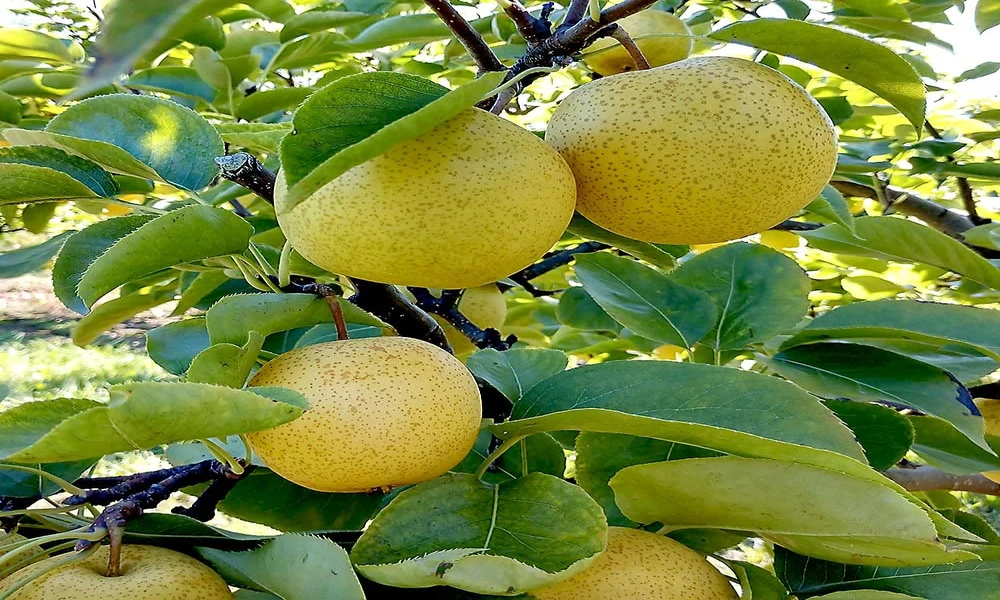
Medlars ask the gardener to enjoy a slower harvest. The tree flowers, develops fruit through summer, and holds its crop into the part of autumn when many familiar orchard fruits have already been picked or stored.
The fruit is not judged only at the moment it leaves the branch. It is gathered mature and then allowed to soften through bletting, a controlled change that develops the texture and flavour for which medlars are valued. That extra stage shapes the whole harvest plan.
There is ornamental interest as well. Spring blossom, a rounded canopy, large leaves, autumn colour, and unusual fruit give the tree a recognisable presence. It suits gardeners who value character across the year rather than measuring success by an immediate bowl of crisp fruit.
A seasonal guide connects those qualities. Planting and shaping prepare the tree, summer observation protects steady development, autumn judgement determines picking, and careful bletting turns a curious crop into something useful in the kitchen.
Medlars reward observation at the end of the season. The fruit should be fully developed before picking, but softness on the tree is not the only sign of readiness and an early frost is not a compulsory trigger. Colour, ease of detachment, weather, and the intended storage method all belong in the decision. Picked fruit needs a cool, airy place where individual fruits are easy to inspect as bletting progresses; damaged pieces should be separated promptly. This period is part of the harvest rather than an accidental wait. A fruit tree specialist from ChrisBowers notes that site, manageable size, and access matter from the start because late picking is easier when the canopy is reachable and the ground remains usable in wet weather. Gardeners comparing medlar trees for sale should therefore plan for both the tree and the post-picking process, linking garden position with the space and time needed to finish the crop well.
The medlar year has a different rhythm from a quick summer harvest. Winter establishes the framework, spring offers a brief floral moment, summer asks for steady observation, and late autumn demands judgement. Bletting then moves the crop from orchard to kitchen over days or weeks rather than in a single picking event.
Six sections follow that rhythm without turning it into a rigid calendar. Local weather, aspect, rootstock, and variety shift dates, so the emphasis remains on visible condition and practical readiness. Seasonal awareness guides the work while the tree itself supplies the final evidence.
Winter: Establish the Tree and Its Framework
Dormancy makes structure and planting position easier to judge; this turns a general instruction into a condition that can be checked after ordinary weather and garden use.
Mulch, a clear trunk base, and moisture checks support the first root season; the gardener is then able to note what changes, what remains stable, and which observation justifies the next action.
The practical course is to prepare an open well-drained site and set the young tree at the correct level with suitable support; the choice gains a defined purpose instead of leaving appearance or habit as the only measure of success.
The weak point in this plan is treating the unusual fruit as a reason to overlook ordinary establishment needs; the point stays connected to the plant’s response and to the practical limits of the surrounding garden.
Tie a review point to the next meaningful change; new growth, settling soil, a dry spell, or harvest supplies evidence without encouraging constant interference, so short-term weather is not mistaken for a permanent result.
Winter soil in Britain ranges from workable loam to ground interrupted by frost or saturation; the task remains repeatable during a busy week, when good access and a clear question matter most.
The most useful conclusion is often modest rather than dramatic: remove the main obstacle, preserve access for inspection, and allow the plant enough time to show whether revised conditions support balanced development, so future care begins from a clear reference point.
The tree enters spring stable and correctly positioned; the long-term test is whether the arrangement still works when the season, crop, and household routine become busier.
Spring: Value Blossom and Pollinator Activity
Medlar blossom adds a distinct stage before the crop becomes visible; small timely corrections protect earlier work and avoid disturbing an established plant later.
Explain the decision without relying on appearance alone; an answer that mentions roots, timing, access, and expected growth usually rests on firmer ground, with notes limited to details that affect the choice.
Care starts to unravel through expecting every flower to become fruit regardless of weather; the approach supports the whole planting instead of solving one narrow problem and creating another.
Good judgement combines several modest signals instead of relying on one persuasive label or appearance; soil condition, plant response, local weather, access, and intended use together produce a decision with a firmer practical base, rather than depending on a single favourable season.
The clearest next step is to observe flowering, shelter, and pollinator activity without disturbing the developing framework; a useful result stays visible through steadier growth, workable soil, or simpler routine care.
Cool wind and wet spells affect spring activity in many UK gardens; the decision takes a realistic place in a productive British garden instead of becoming a one-day task.
Balanced pruning and an open position preserve light around the blossom; the value lies in preserving options while roots, growth, or soil response provide better evidence.
The ornamental season supports rather than competes with cropping; a second look after rain, wind, or fresh growth often reveals more than the first inspection.
Summer: Support Leaves and Developing Fruit
The summer canopy supplies the energy for fruit development and future growth; the long-term test is whether the arrangement still works when the season, crop, and household routine become busier.
A sound plan starts when gardeners check moisture, remove strong competition at the base, and watch extension growth; this turns a general instruction into a condition that can be checked after ordinary weather and garden use.
The mistake to guard against is responding to every mark with unnecessary treatment or heavy feeding; the choice gains a defined purpose instead of leaving appearance or habit as the only measure of success.
Dry spells alternate with humid periods even in the same British summer; the point stays connected to the plant’s response and to the practical limits of the surrounding garden.
Test the arrangement through access in poor weather; a visible and reachable inspection point makes useful checks far more likely to continue, and routine access stays part of the assessment.
Steady water and open growth give clearer evidence of tree condition; the task remains repeatable during a busy week, when good access and a clear question matter most.
The practical value becomes clearest when more than one person uses the garden; a visible, understandable arrangement makes good care easier to share and reduces the risk of well-meant work undoing an earlier decision, while nearby planting and access continue to evolve.
Fruit develops on a tree that remains balanced; the gardener is then able to note what changes, what remains stable, and which observation justifies the next action.
Autumn: Judge Maturity Before Picking
Late fruit needs observation rather than a date copied from another garden; a second look after rain, wind, or fresh growth often reveals more than the first inspection.
A misleading shortcut is waiting automatically for hard frost or picking only because other orchard fruit is finished; a useful result stays visible through steadier growth, workable soil, or simpler routine care.
The decision becomes workable when gardeners combine colour, firmness, detachment, forecast, and variety information when choosing the picking moment; small timely corrections protect earlier work and avoid disturbing an established plant later.
Reachable branches and a prepared picking area reduce bruising; the decision takes a realistic place in a productive British garden instead of becoming a one-day task.
The wider significance is that one local decision influences soil, access, plant growth, and future harvest; judging those effects together prevents a neat short-term answer from becoming a recurring maintenance problem, without assuming that next season will repeat this one.
Regional temperatures and exposed sites bring different late-autumn conditions; the approach supports the whole planting instead of solving one narrow problem and creating another.
Photographs from the same position create a simple record, revealing gradual crowding, colour change, settling, and seasonal movement that memory tends to smooth over, so correction remains proportionate to the problem.
The crop leaves the tree mature and ready for careful handling; the value lies in preserving options while roots, growth, or soil response provide better evidence.
Bletting: Manage the Change Deliberately
Bletting is a controlled post-harvest stage, not simple neglect; the gardener is then able to note what changes, what remains stable, and which observation justifies the next action.
Indoor temperature and humidity vary widely between British homes, sheds, and outbuildings; the choice gains a defined purpose instead of leaving appearance or habit as the only measure of success.
The preferred approach is to arrange sound fruit in a cool airy place and inspect pieces individually as they soften; the long-term test is whether the arrangement still works when the season, crop, and household routine become busier.
When the issue is considered before ordering or major work, the gardener keeps more choices open; once roots settle and surrounding planting develops, the same correction usually requires more disturbance and offers fewer elegant solutions, while leaving room for ordinary household use.
Separate reversible choices from permanent ones; temporary protection or monitoring gathers information before roots, structures, or long-term spacing are committed, while the original purpose of the work stays clear.
The assumption worth challenging is piling damaged and sound fruit together or forgetting the crop in sealed storage; this turns a general instruction into a condition that can be checked after ordinary weather and garden use.
Regular checks identify fruit ready for use and remove spoilage early; the point stays connected to the plant’s response and to the practical limits of the surrounding garden.
The characteristic texture develops under observation; the task remains repeatable during a busy week, when good access and a clear question matter most.
Kitchen and Garden: Complete the Seasonal Cycle
A medlar earns its place through use as well as novelty; the value lies in preserving options while roots, growth, or soil response provide better evidence.
The useful intervention is to plan small batches for preserves, desserts, sauces, or other preferred recipes and record harvest timing; a second look after rain, wind, or fresh growth often reveals more than the first inspection.
Compare the area before and after ordinary weather; moisture, firmness, movement, leaf response, and access together provide a more dependable reading than one ideal-day inspection, and later comparisons begin from a known baseline.
Late autumn kitchens are already busy with stored apples, pears, and preserves; a useful result stays visible through steadier growth, workable soil, or simpler routine care.
A modest use plan turns experimentation into a repeatable tradition; the approach supports the whole planting instead of solving one narrow problem and creating another.
There is also a design question, because productive plants share space with paths, windows, neighbouring crops, and household routines; the solution should protect horticultural needs without making the wider garden less comfortable to use, so future care begins from a clear reference point.
Problems begin with growing an unfamiliar crop without deciding how the household will taste or process it; small timely corrections protect earlier work and avoid disturbing an established plant later.
The tree’s unusual season becomes part of the household year. Recording the picking date and the number of days needed for bletting creates a household timetable for later years. It also helps separate fruit that was harvested too early from fruit that simply needed different storage conditions, improving both use and confidence in the crop; the decision takes a realistic place in a productive British garden instead of becoming a one-day task.
This final section returns to the medlar year from dormant planting through blossom, summer care, late-autumn picking, bletting, and kitchen use; the aim is an agreement between plant, site, and repeatable care that remains convincing after the first season.