
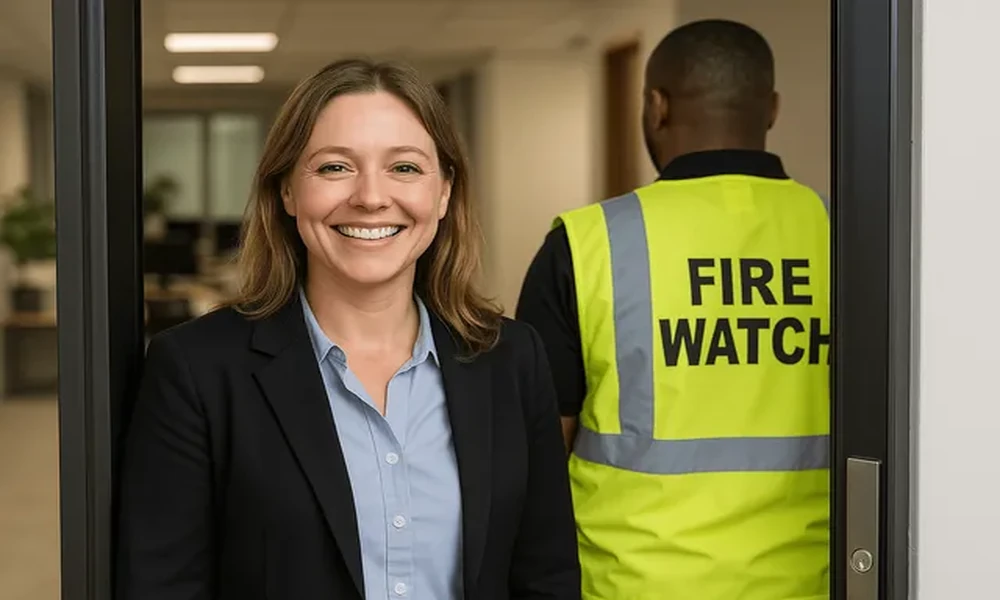
The task of managing fire safety at several sites is often complex. A retail chain can consist of several dozen stores, each with varying layouts, hours of operation and fire hazards. Maintenance activities may cause temporary hazards and alarms may fail, making it difficult to provide consistent fire watch coverage at all of these locations. As businesses expand, a well-organised approach enables them to coordinate staff members, communicate effectively and ensure safety measures remain the same.
To streamline operations across multiple regions, implementing a centralized nationwide fire watch strategy allows corporate leadership to maintain strict safety standards without managing dozens of separate vendors. Partnering with a provider that can deploy vetted personnel across all regions ensures uniform training, synchronized reporting formats, and fast response times whether a store is in a major metro area or a remote suburban plaza. By establishing this overarching framework early, multi-site operators can effectively mitigate compliance risks and protect brand reputation across their entire geographic footprint.
Knowing what the needs are for each location.
No two facilities will have the same fire safety requirements. A retail store could require monitoring of customers’ areas and stockrooms and a distribution centre might have larger stockrooms, loading bays and machinery. Businesses should conduct a property-by-property evaluation of layout, occupancy, hours of operation and fire hazards before rolling out their coverage. This assists in identifying areas for guards, the frequency of patrols and the need for special monitoring.
Create a Consistent Coverage Plan
Multiple locations need to be managed in a systematic and consistent way. Having a common method to patrol, report hazards, respond to emergencies, and pass shifts simplifies the process of uniformity at various facilities. But there should be no uniformity, when it comes to standardisation. Individual site conditions, local regulations and specific safety requirements should be allowed for in a central fire watch plan. This balance ensures that businesses can adhere to uniform standards while not neglecting local risks.
Employing staff from multiple locations to coordinate care.
The more locations, the more complex it gets when it comes to staffing. Retail chains could require temporary protection during night-time maintenance, or distribution centres may need to be continuously monitored if the fire protection system is not installed. A good fire watch provider will be able to scale up and down the number of guards as needed and will have protocols for shift changes and unexpected absences. Businesses should also set up the urgency of the business coverage requests, especially if it is a multi-location business.
Using Reporting to Maintain Oversight
Daily activity can be challenging to monitor when fire watch operations are conducted across multiple facilities without organisation. Digital patrol logs, time-stamped inspection logs and incident logs can provide property managers with a better understanding of what is happening at every site.
Good documentation also helps to identify recurring issues, for example, repeated electrical hazards, or issues with emergency exits. Centralised reporting simplifies incident review and action across the organisation by management teams.
Managing Communication Across Locations:
When several sites are in operation without involvement from a single site, communication is a critical component. Store managers, facility supervisors, maintenance staff and fire watch personnel should be aware of who to contact when a hazard is seen.
Establishing designated contacts and clear escalation procedures helps prevent important information from getting lost. This ongoing update also enables central management to track coverage and take action when site conditions alter.
.Preventing the spread of wildfire on a large scale.
Increasing the number of guards is not enough to scale up fire watch coverage. It reflects staff coordination, site-specific planning, reliable communication and consistent documentation. Central control and individual facility flexibility allow retail chains and distributed businesses to control temporary fire hazards while maintaining overall business operations.