
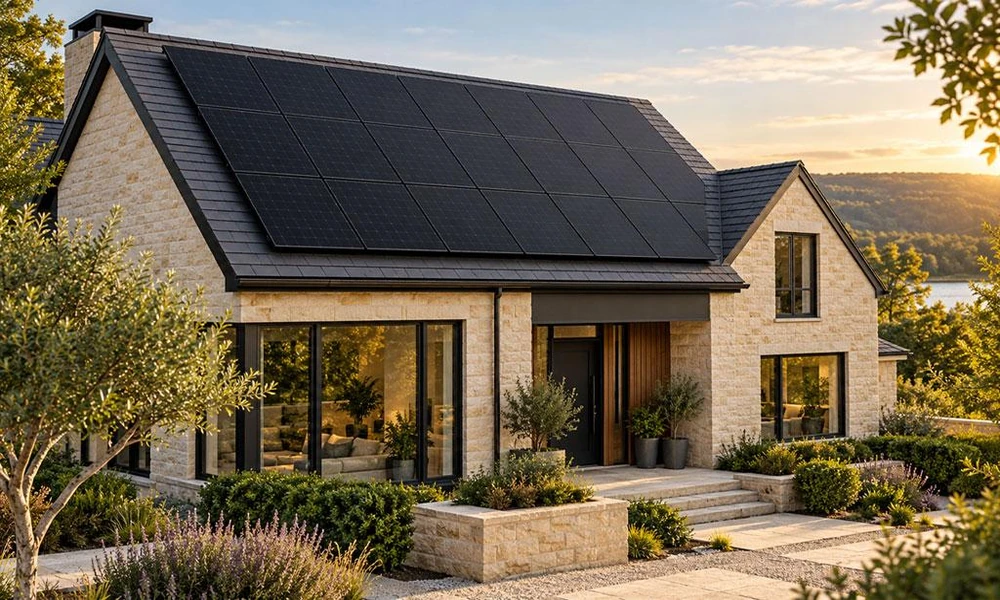
Solar panels become part of the exterior as soon as they are installed. Their color, proportions and visible borders sit alongside roofing, windows and wall finishes in the view of the house. For homeowners planning a coordinated renovation, all-black modules can be an attractive design option. Evaluating them carefully means looking at the complete surface and understanding how the materials contribute to its appearance.
Begin with your home’s existing character. A contemporary house with dark window frames may suggest one direction, while a traditional property with textured roofing may suggest another. Collect photographs of your exterior from the street and garden before meeting the installer. Explain whether you want the solar array to blend into the roof or become a more visible architectural feature.
Review the arrangement before concentrating on individual shades. Ask for a drawing showing module positions, roof edges, chimneys and other visible elements. Look at the size and shape of the complete array, the gaps between sections and any areas left uncovered. A carefully planned rectangle or balanced grouping may suit your priorities better than a layout assessed only by its total panel count.
Then request samples of the actual module. The phrase “all-black” does not communicate every detail of the cells, background, frame and glass. Ask which elements are visible in the proposed design and whether the sample matches the exact product reference in the quotation. Compare the sample with roofing and exterior finishes outdoors, where you can review the materials together under natural light.
Materials within the laminate also influence the appearance. B601RS EVA solar film is a black infrared-reflective encapsulation material intended for photovoltaic modules, including all-black designs. It supports appearance consistency and reduces grayish discoloration after lamination. It is a manufacturing material used inside the module, giving producers an option when developing a coordinated dark appearance.
The optical description needs a careful reading. A black visible surface and reflection in an infrared wavelength range describe different aspects of a material. B601RS’s infrared-reflective function should not be interpreted as a statement about how reflective the installed panel will look to a neighbor, or as a guarantee of a particular household energy gain. Ask for the finished module’s appearance sample and performance documentation.
Surface finish is another part of the review. Ask to see photographs of completed installations using the same product, preferably from several angles. Consider the relationship between the module glass, frame and roof covering. Request a closer image of the boundaries between cells and around the module perimeter. Those details may matter more to you than they do in a distant promotional photograph.
Keep the energy comparison alongside the design discussion. Request an estimate based on the actual module model and roof layout, with the assumptions about shading and installation location explained. Compare alternatives on the same basis. An attractive finish is a legitimate preference, but the expected generation should be established through the proposed system design and product data rather than inferred from the panel’s color.
If you are considering building-integrated photovoltaics, ask how the solar elements relate to the surrounding building materials. The Department of Energy’s overview of BIPV explains that these products can perform building functions in roofs, façades and other elements. Request drawings of the transitions, borders and joints, since they form part of the architectural appearance as well as the construction proposal.
Consider future replacements while reviewing the finish. Ask how a damaged module would be sourced and whether a replacement might differ visually from the surrounding installation. Request the manufacturer’s guidance on appearance changes and warranty coverage. For a particularly prominent roof or façade, discuss whether retaining a sample or documenting the original production batch would be useful for later service work.
A small design exercise can help make the choice concrete. Ask for two exterior mock-ups using the shortlisted products and the same roof layout. Keep the viewpoint, lighting treatment and surrounding finishes consistent so that you can compare the intended designs fairly. Review both from the viewpoint you use most often, whether that is the driveway, street or garden. List the details that matter to you, such as frame visibility, gaps or alignment with a roof edge. Give that list to the installer alongside your selected sample, creating a shared reference for the finished appearance.
Before placing the order, prepare an approval sheet with the product model, layout drawing, sample photographs and agreed visible finish. Include the proposed cable routes and any changes to gutters or roof details. Ask the installer to flag substitutions before delivery. Use the approved sheet during the final walkthrough, comparing the installation with the appearance you selected and recording any items that still need the contractor’s attention.