
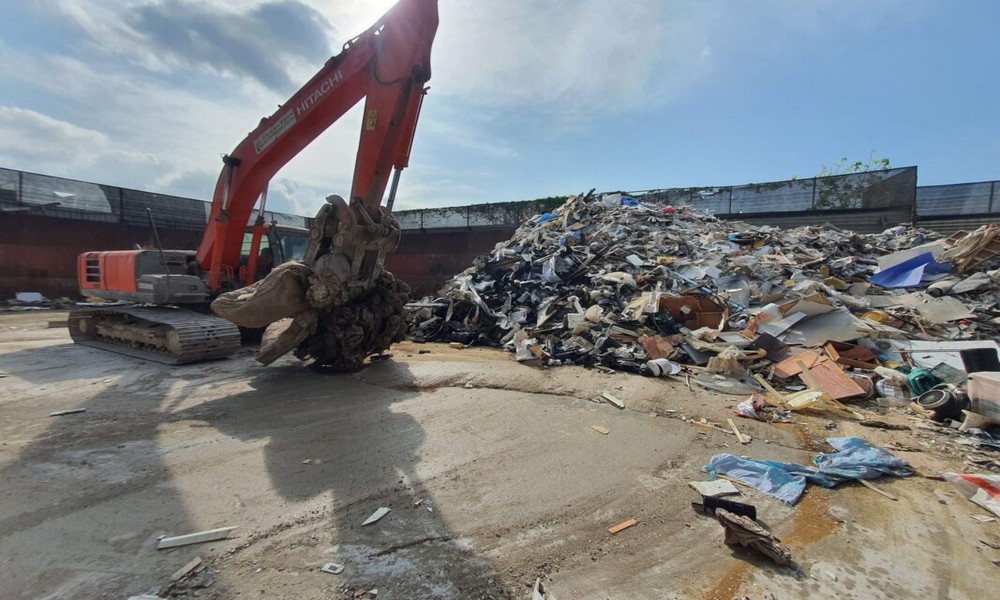
Junk disposal services in Singapore operate within a regulatory framework that most users know nothing about until a problem arises. Improper disposal of waste in Singapore carries real consequences: littering fines, notices from town councils, and in cases involving significant quantities of waste dumped in public areas, prosecution under the Environmental Public Health Act. Understanding what proper disposal means in practice helps you choose a service that keeps you compliant and the waste out of illegal channels.
How Waste Disposal Is Regulated in Singapore
The National Environment Agency (NEA) licenses all waste collectors in Singapore. A licensed waste collector has met specific requirements around vehicle standards, disposal practices and operational accountability. When you engage a licensed operator, your waste goes to a licensed incineration plant, landfill or recycling facility. When you use an unlicensed operator, you have no way to verify where your waste ends up.
The distinction matters practically. Waste dumped in nature reserves, at construction sites, or in residential common areas has been traced back to homeowners and businesses who paid for disposal services that turned out to be unlicensed. The NEA takes enforcement action against the waste generator in some cases, not only the operator who dumped the waste.
Choosing a junk disposal Singapore service that is either directly NEA-licensed or that contracts with licensed disposal facilities protects you legally and ensures the waste is handled in compliance with Singapore’s environmental regulations.
What Proper Disposal Looks Like for Different Waste Types
Different categories of waste have different approved disposal routes in Singapore.
General household waste goes to incineration plants, which are the standard destination for non-recyclable mixed waste in Singapore. The resulting ash goes to Semakau Landfill.
Bulky furniture and appliances can be donated if in good condition, dismantled and recycled for scrap metal, or delivered to licensed collection points. Refrigerators and air conditioners, which contain refrigerants, require handling by technicians certified to recover these gases safely.
Electronic waste should go to the National Environment Agency’s e-waste recycling programme or authorised recycling points at electronics retailers and community centres. E-waste contains heavy metals and chemicals that cause serious environmental harm if incinerated with general waste.
Renovation construction waste including concrete, tiles, timber and metal goes to licensed construction waste processors, which are separate from standard incineration plants. Using an operator not licensed for construction waste can result in the material being improperly disposed of.
Recyclables including paper, cardboard, plastics, metals and glass should be separated before disposal and placed in the correct recycling channels.
A professional junk disposal services operator is familiar with all of these channels and routes each category of waste accordingly.
What Good Junk Disposal Services Provide
The fundamentals of a reliable service are straightforward. They arrive on time, carry items from wherever they are in the property, load them properly onto a licensed vehicle, and transport them to the correct facility for the waste type.
Before starting, a professional operator provides a written quotation covering which items are being collected, the volume or number of truck loads, the disposal method, and the total charge. No surprise additions after the job is done.
“In Singapore, we do not just manage waste. We account for it from beginning to end.” – Masagos Zulkifli, former Singapore Minister for the Environment.
Reputable operators also provide a receipt or invoice confirming what was collected and when. For businesses that need to demonstrate compliance with their waste management obligations, this documentation is useful.
Booking and Scheduling
Junk removal Singapore bookings for residential clearances are typically available within twenty-four to forty-eight hours of enquiry for standard jobs. Same-day service is available with most operators for straightforward collections from accessible locations.
For commercial clearances, renovation sites and estate clearances where the volume is larger, advance scheduling allows the operator to allocate the right vehicle size and team size for the job, which produces a more efficient outcome than calling the morning of the clearance.
When booking, provide as much detail as possible about what needs to be collected: item types, approximate quantity, floor level, whether a lift is available, and any access restrictions. The more information the operator has, the more accurate the quote and the better prepared the team will be on arrival.
Avoiding Common Problems
The most common issue reported with junk disposal services is a final price that differs from the initial quote. This typically happens when additional items are added to the collection on the day, when access is more difficult than described, or when the volume significantly exceeds the estimate.
Prevent this by providing a complete and accurate description of the items when booking, confirming the scope in writing before the team starts work, and establishing that any additions to the scope will be quoted separately before the team proceeds.
Junk disposal services in Singapore that operate within the regulatory framework, provide transparent pricing, and route waste through proper channels give you a clearance you can trust was done correctly from start to finish.