
Two Roles That Look Similar but Are Not
When a property owner needs someone on site quickly, the instinct is often to call a general security company. That instinct makes sense on the surface, since both fire watch personnel and security guards patrol a property and keep an eye on things. However, the two roles are built around fundamentally different risks, and treating them as interchangeable can leave a building out of compliance even when someone is technically standing watch.
Bringing in a specialized provider like The Fast Fire Watch Company ensures that property owners receive dedicated personnel explicitly trained for life safety compliance rather than general security duties. Unlike standard security guards, these certified professionals step on-site equipped with a deep understanding of local fire codes, proper hazard recognition, and mandatory log-keeping protocols. Securing this targeted expertise guarantees that your building remains fully compliant and protected by experts whose sole focus is fire prevention and rapid emergency response.
What Fire Watch Personnel Are Trained to Do
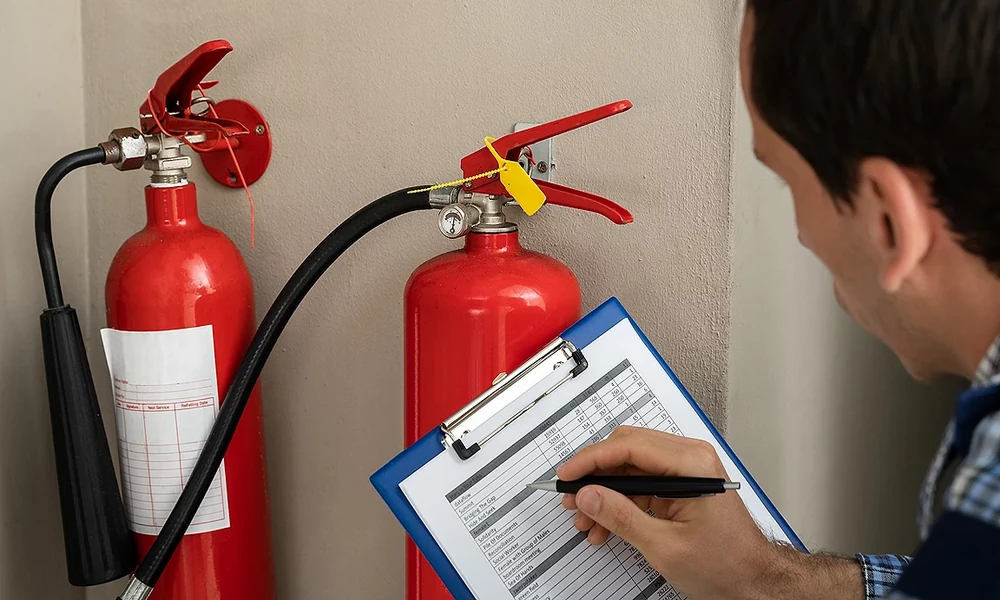
Fire watch guards are trained specifically to detect, monitor, and respond to fire hazards. Their focus includes recognising early signs of trouble, such as the smell of smoke, unusual heat, or a hazard-blocked exit, well before it becomes visible as flame. They know how to use fire extinguishers, understand basic fire behaviour, and are trained to coordinate directly with the fire department during an emergency. Just as importantly, they understand how to complete a fire watch log correctly, since documentation is often what determines whether a fire watch actually satisfies code during an inspection.
This role is typically required when a fire alarm or sprinkler system is impaired, during hot work such as welding or cutting, or on construction sites where fire protection systems are not yet fully installed.
What Traditional Security Guards Are Trained to Do
Traditional security guards are trained around an entirely different set of risks. Their focus is on human behaviour: checking identification, monitoring cameras, responding to trespassing or theft, and de-escalating conflict. They generally receive training in surveillance and basic first aid, but unless specifically required by their employer or local regulation, they typically lack the specialised fire safety training that a fire watch role demands. A security guard can certainly patrol a property, but a patrol built around deterring crime is not the same as one built around detecting a developing fire hazard.
Why the Distinction Matters for Compliance
The difference becomes critical the moment a fire protection system goes offline. Camera monitoring or a general security presence alone does not satisfy fire watch requirements under most fire codes. If an inspection or an insurance claim later reveals that the person on site was not actually trained or logging activity the way a fire watch requires, the building owner can be left without a defensible record, regardless of how attentive that guard may have been. Verifying certifications, reviewing sample logs, and confirming a provider understands local fire watch requirements before hiring is the simplest way to avoid this gap.
Final Thoughts
Fire watch and security services both play an important part in protecting a property, but they are not substitutes for one another. When a fire protection system is down, during hot work, or on an active construction site, the job calls for personnel trained specifically in fire hazard recognition and documentation, not general security coverage. Understanding this distinction upfront helps property owners choose the right service the first time.